SS7 Call Interception Attacks
Sophisticated techniques to intercept and eavesdrop on voice communications by manipulating SS7 signaling messages. These attacks enable complete call interception, recording, and man-in-the-middle scenarios.
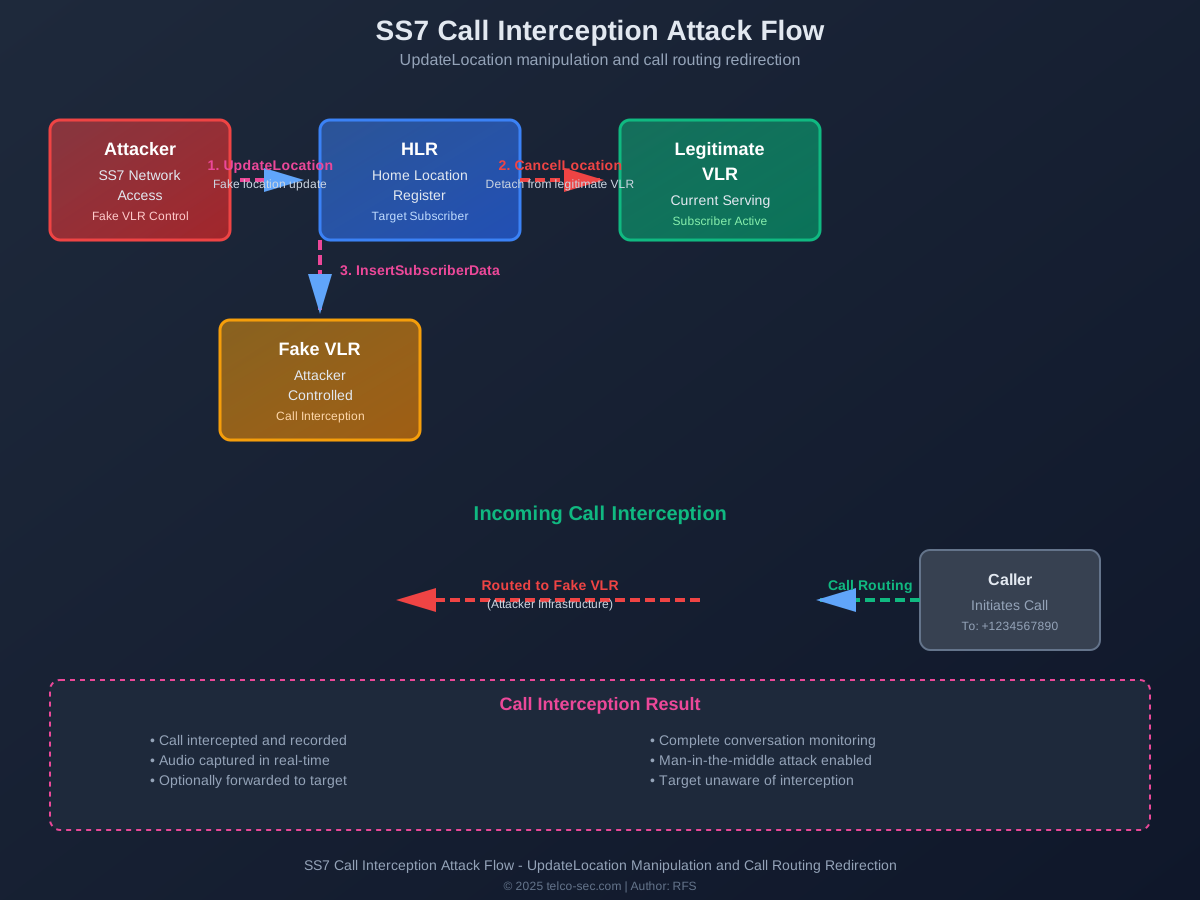
UpdateLocation (UL) manipulation is the most powerful SS7 attack for call interception. Attackers send fake UpdateLocation messages to the target's HLR, making the network believe the subscriber has roamed to an attacker-controlled MSC/VLR. All incoming calls are then routed through the attacker's infrastructure, enabling complete call interception.
Attack Sequence:
- Attacker sends UpdateLocation to target's HLR
- HLR sends CancelLocation to legitimate VLR
- HLR sends InsertSubscriberData to attacker's fake VLR
- Incoming calls routed to attacker's infrastructure
- Attacker can intercept, record, and forward calls
Technical Details:
- • Requires SS7 network access and attacker-controlled MSC/VLR
- • Exploits trust-based SS7 architecture
- • No authentication required for UpdateLocation messages
- • Enables complete call interception without device compromise
- • Can forward calls to original destination to avoid detection
Real-World Impact:
Used in corporate espionage and government surveillance operations. Demonstrated live at security conferences in 2016. Enables man-in-the-middle attacks on voice communications, allowing complete conversation interception and recording.
InsertSubscriberData (ISD) attacks modify subscriber profile information to enable call forwarding or supplementary services that redirect calls through attacker-controlled infrastructure. This attack can be combined with UpdateLocation for more sophisticated interception scenarios.
Capabilities:
- • Enable unconditional call forwarding
- • Modify supplementary service settings
- • Change call barring configurations
- • Alter CAMEL service logic
- • Redirect calls without user awareness
Attack Methodology:
- Obtain subscriber information via location tracking
- Send InsertSubscriberData with modified profile
- Enable call forwarding to attacker infrastructure
- Intercept and forward calls as needed
SendRoutingInfo (SRI) exploitation involves intercepting and modifying SRI responses to redirect incoming calls. Attackers position themselves in the signaling path and manipulate routing information to direct calls through their systems before delivering to the actual recipient.
Technical Requirements:
- • Position in signaling path between networks
- • Ability to intercept and modify MAP messages
- • Real-time message processing capability
- • Call routing infrastructure
- • Understanding of SRI message structure
Attack Flow:
- Position in signaling path (interconnect point)
- Intercept SendRoutingInfo requests
- Modify routing information in responses
- Direct calls through attacker infrastructure
- Forward calls to original destination
Advanced call interception scenarios combine multiple SS7 attack vectors to achieve persistent, undetectable call interception capabilities.
Multi-Stage Call Interception:
- Initial location tracking to identify network
- UpdateLocation manipulation to redirect calls
- InsertSubscriberData to enable call forwarding
- Call recording and analysis infrastructure
- Selective call forwarding to avoid detection
Stealth Techniques:
- • Forward calls to original destination after interception
- • Selective interception (targeted numbers only)
- • Periodic UpdateLocation updates to maintain redirection
- • Use of legitimate-looking Global Titles
Real-World Case Studies
During the Ukrainian conflict, SS7 attacks were used to intercept communications and track military personnel. The attacks resulted in military intelligence compromise and operational security breaches, demonstrating the use of SS7 vulnerabilities in modern warfare scenarios.
Impact:
- • Military communications intercepted
- • Troop movements tracked
- • Operational security compromised
- • Strategic intelligence gathered
Detection and Mitigation
Deploy SS7 firewalls to filter unauthorized UpdateLocation and InsertSubscriberData operations. Block these operations from untrusted sources and implement rate limiting.
Firewall Rules:
- • Block UpdateLocation from non-VLR sources
- • Restrict InsertSubscriberData operations
- • Filter by source Global Title
- • Implement anomaly detection
Monitor SS7 traffic for suspicious UpdateLocation patterns and unexpected call routing changes. Detect anomalies in subscriber location updates.
Detection Indicators:
- • Unexpected location updates
- • Calls routed to unknown networks
- • Unusual routing patterns
- • Multiple location updates in short time