Android Security - Mobile Device Vulnerabilities
Comprehensive analysis of Android security vulnerabilities, exploitation techniques, and defense strategies for mobile device security professionals and researchers.
Android Security Overview
Comprehensive visualization of all Android security attack vectors organized by severity and category.
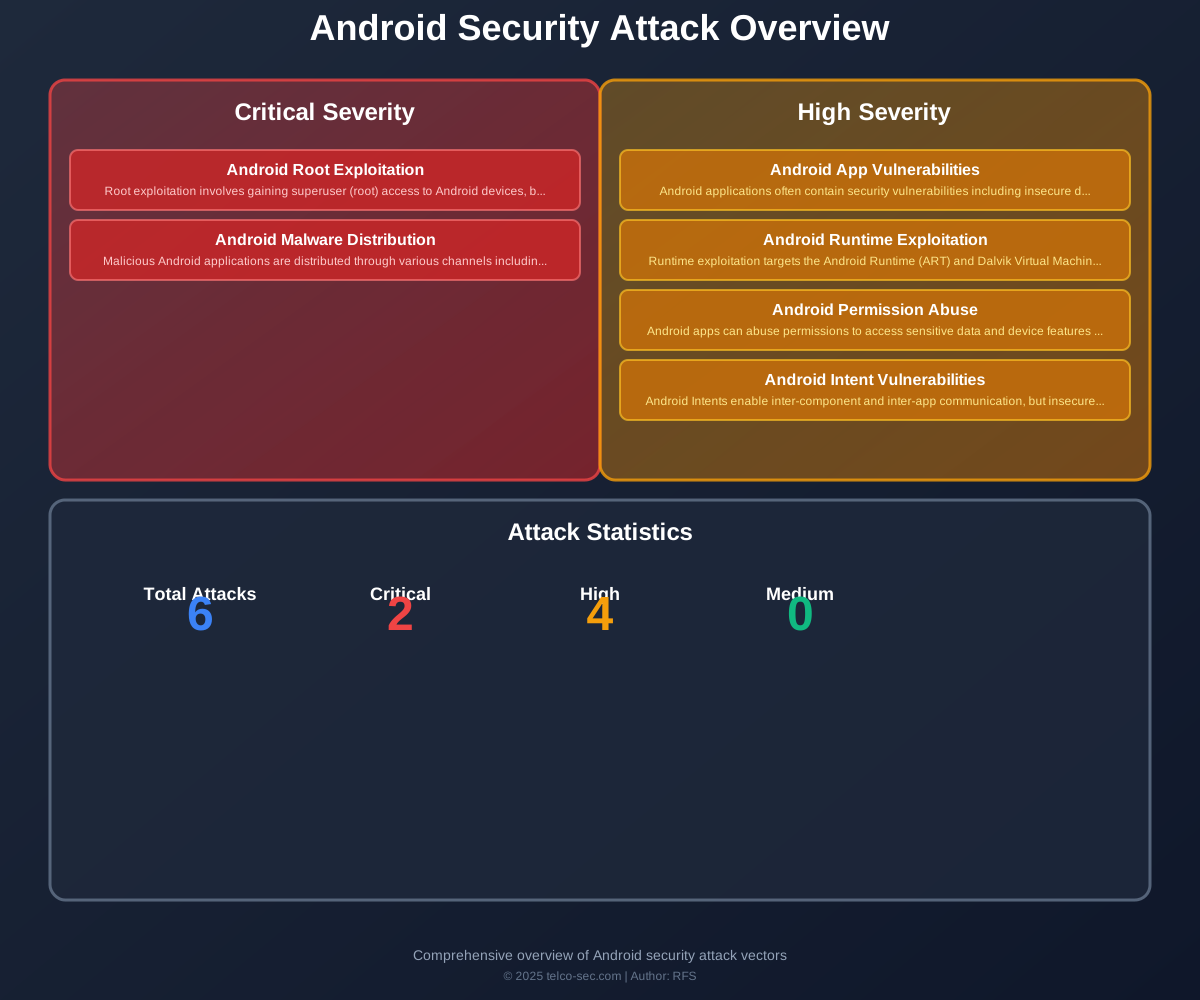
Android Security Attack Overview
Comprehensive visualization of Android security attack vectors and their relationships.
Android Security Attacks
Detailed analysis of Android security vulnerabilities and exploitation techniques.
Root exploitation involves gaining superuser (root) access to Android devices, bypassing security restrictions to install malicious apps, modify system files, and access sensitive data.
Android applications often contain security vulnerabilities including insecure data storage, improper authentication, exposed components, and insecure inter-process communication that can be exploited.
Runtime exploitation targets the Android Runtime (ART) and Dalvik Virtual Machine to execute malicious code, bypass security checks, and manipulate application behavior at runtime.
Malicious Android applications are distributed through various channels including third-party app stores, sideloading, phishing, and social engineering to compromise devices and steal data.
Android apps can abuse permissions to access sensitive data and device features beyond their stated purpose, exploiting the permission model to collect user data and perform unauthorized actions.
Android Intents enable inter-component and inter-app communication, but insecure intent handling can lead to unauthorized access, data leakage, and privilege escalation attacks.
Key Android Security Vulnerabilities
Kernel vulnerabilities, bootloader exploits, and privilege escalation techniques that allow attackers to gain root access and bypass Android's security model.
CriticalInsecure data storage, exposed components, weak cryptography, and improper permission handling in Android applications.
HighDynamic instrumentation, hooking frameworks, and runtime manipulation to bypass security controls and extract sensitive data.
HighMalicious apps distributed through third-party stores, phishing, and social engineering to compromise devices and steal data.
CriticalDefense Strategies
Regularly update Android OS, security patches, and applications to protect against known vulnerabilities.
Implement secure coding practices, proper permission handling, and security testing throughout the development lifecycle.
Only install apps from Google Play Store and verify app sources. Enable Google Play Protect for additional security.
Deploy Mobile Device Management (MDM), Mobile Threat Defense (MTD), and Runtime Application Self-Protection (RASP) solutions.
Implement root detection, anti-tampering mechanisms, and runtime integrity checks to detect and prevent exploitation.
Educate users about security risks, phishing, social engineering, and safe mobile device usage practices.