RAN Attacks

Radio Interface Manipulation

Understanding Radio Access Network (RAN) interface vulnerabilities, cellular protocol exploitation, and radio interface manipulation techniques that enable man-in-the-middle attacks and network identity spoofing.
Back to UE Attacks
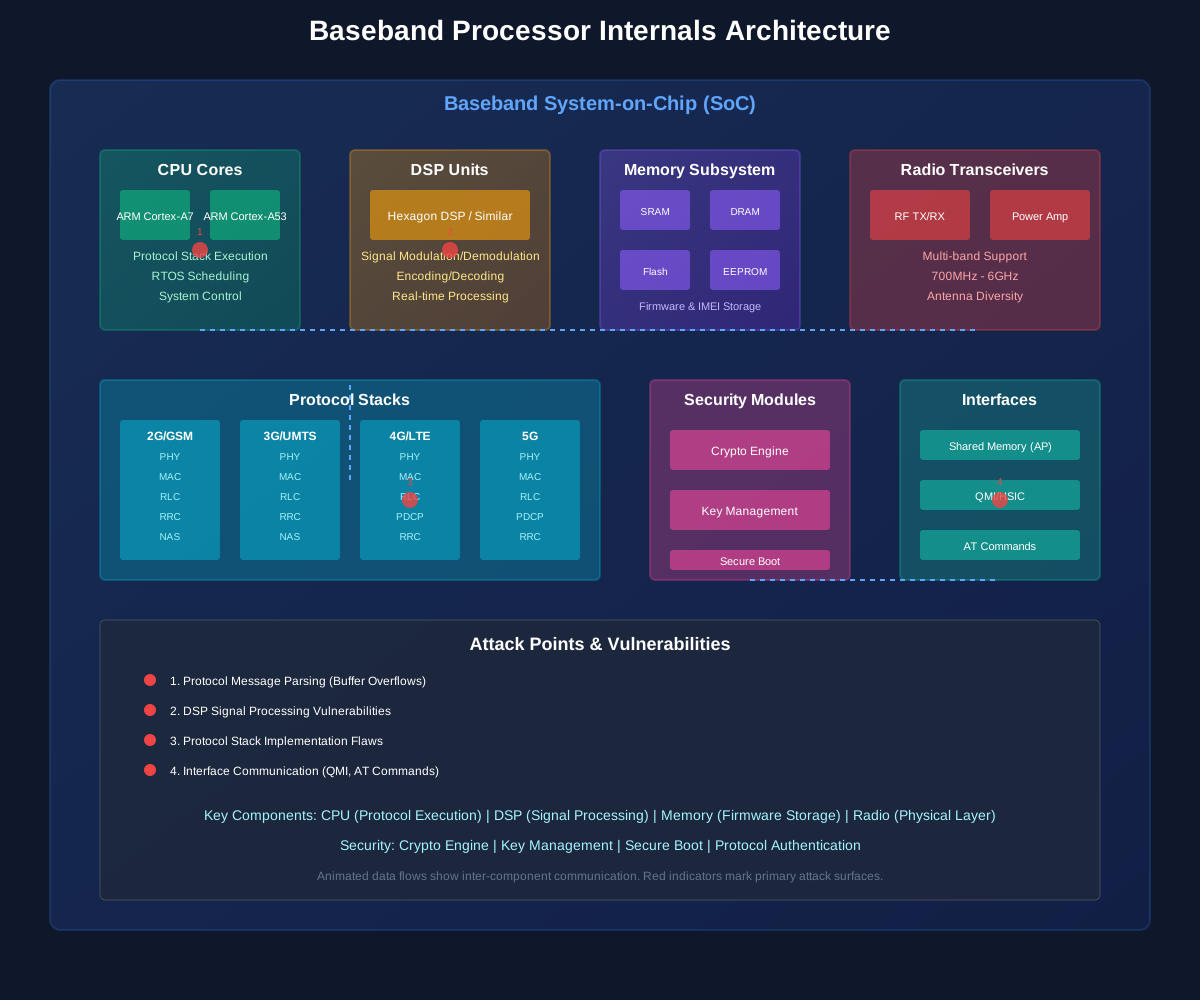
Baseband Processor Internals
Deep dive into baseband processor architecture, components, and attack surface
Baseband processor internals architecture diagram showing complete system-on-chip (SoC) structure with CPU cores, DSP units, memory subsystems, radio transceivers, protocol stacks, security modules, and inter-component communication buses with animated data flows

Baseband Processor Overview

The baseband processor is a specialized system-on-chip (SoC) that operates independently from the main application processor. It handles all cellular radio communications including 2G (GSM), 3G (UMTS), 4G (LTE), and 5G protocols. The baseband runs its own real-time operating system (RTOS), typically ThreadX, Nucleus, or a proprietary RTOS, and executes firmware that is often closed-source and difficult to audit.
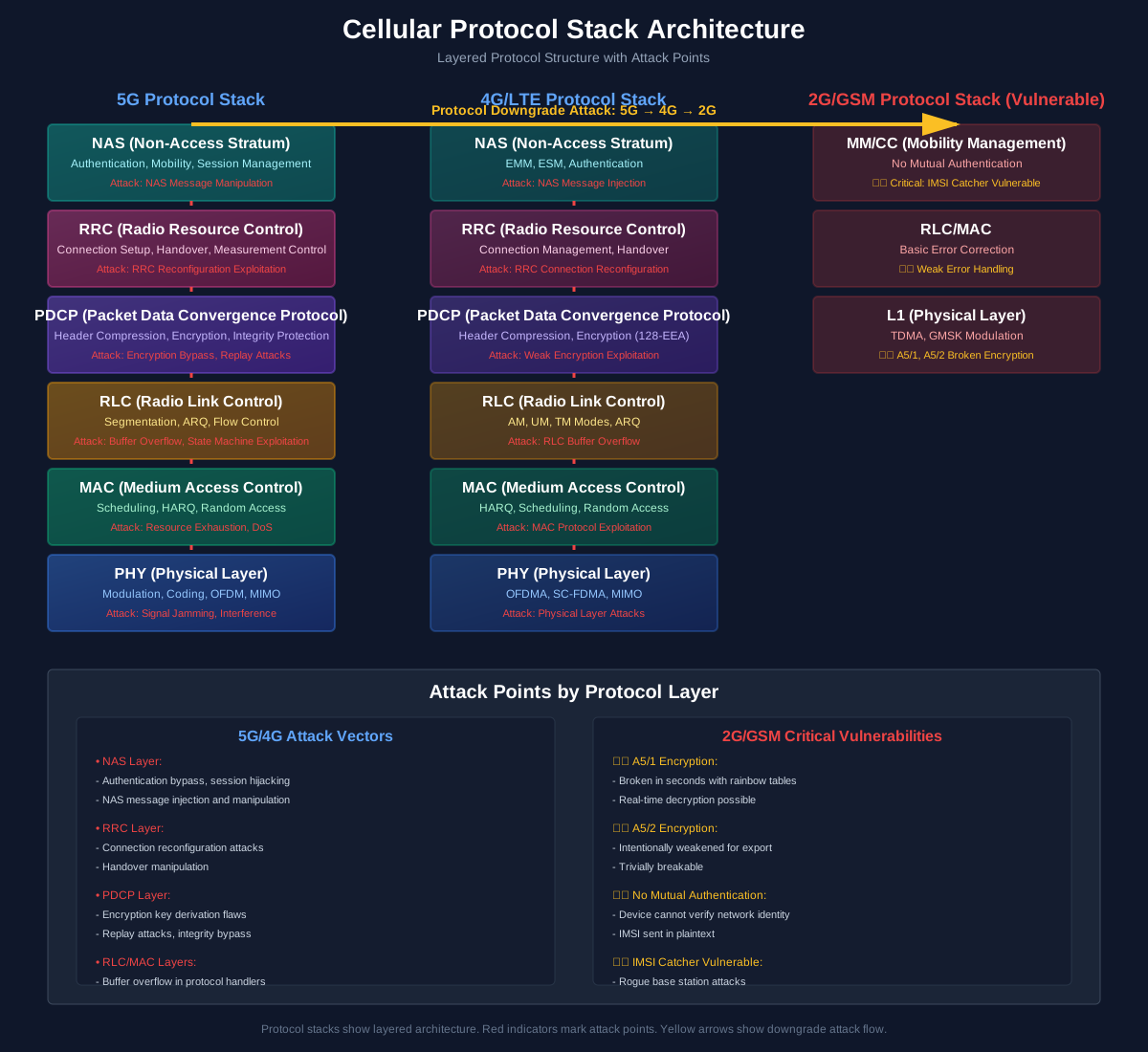
Cellular Protocol Stack Architecture
Understanding the layered protocol architecture and attack points at each layer
Cellular protocol stack architecture diagram showing layered structure from physical layer through application layer for 2G/3G/4G/5G protocols, with attack points highlighted at each layer including protocol downgrade, message manipulation, and MITM attack vectors
Attack Vectors
Methods used to execute radio interface manipulation
  • 1Protocol message manipulation
  • 2Network identity spoofing
  • 3Downgrade attack exploitation
  • 4Radio interface fuzzing
  • 5Baseband protocol stack vulnerabilities
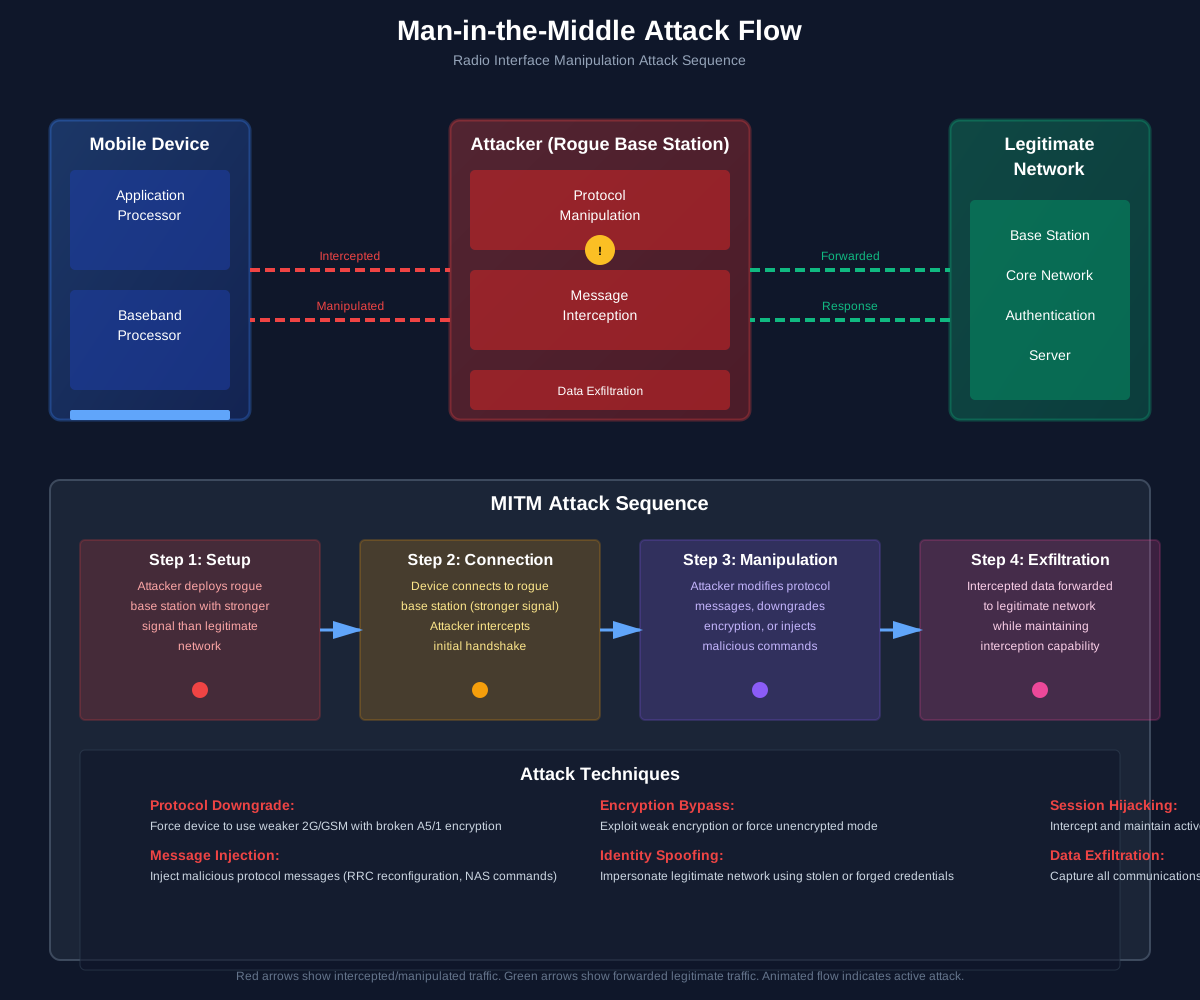
Man-in-the-Middle Attack Flow
Step-by-step visualization of MITM attacks on cellular communications
Man-in-the-middle attack flow diagram showing attacker positioning between mobile device and legitimate base station, protocol message interception and manipulation, encryption bypass techniques, and data exfiltration with animated attack flow indicators
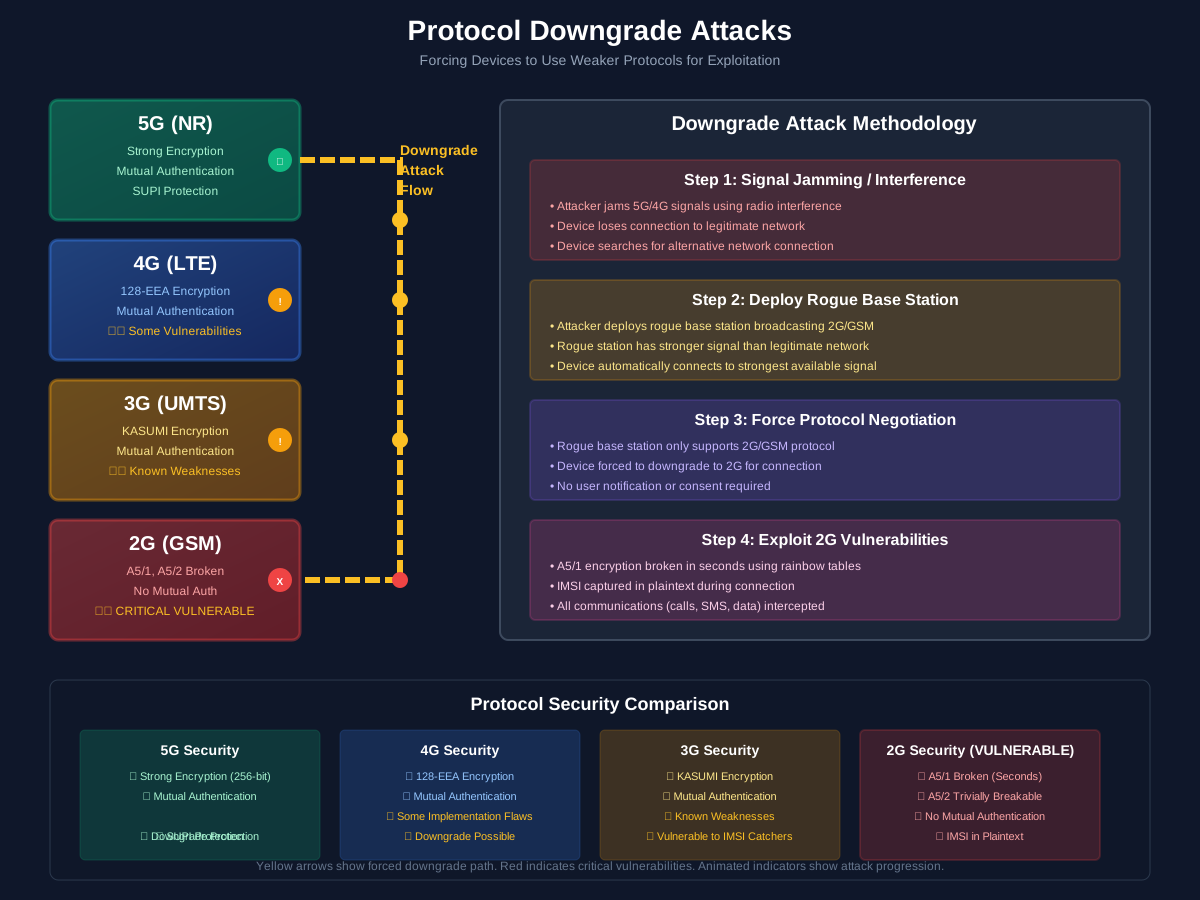
Protocol Downgrade Attacks
Forcing devices to use weaker protocols (5G → 4G → 3G → 2G) to exploit known vulnerabilities
Protocol downgrade attack diagram showing forced downgrade from 5G through 4G, 3G, to 2G protocols, vulnerability exploitation at each stage, encryption weaknesses (A5/1, A5/2), and attack success indicators with animated protocol transitions

Downgrade Attack Methodology

2G/GSM Vulnerabilities

GSM uses weak A5/1 and A5/2 encryption algorithms that can be broken in real-time. Once downgraded to 2G, attackers can intercept all communications.

  • A5/1 encryption broken in seconds
  • A5/2 intentionally weakened
  • No mutual authentication
  • IMSI sent in plaintext
3G/UMTS Weaknesses

While 3G has stronger security than 2G, it still has vulnerabilities that can be exploited through protocol manipulation.

  • Weak key derivation functions
  • Vulnerable to IMSI catchers
  • Limited protection against MITM
  • Known cryptographic weaknesses
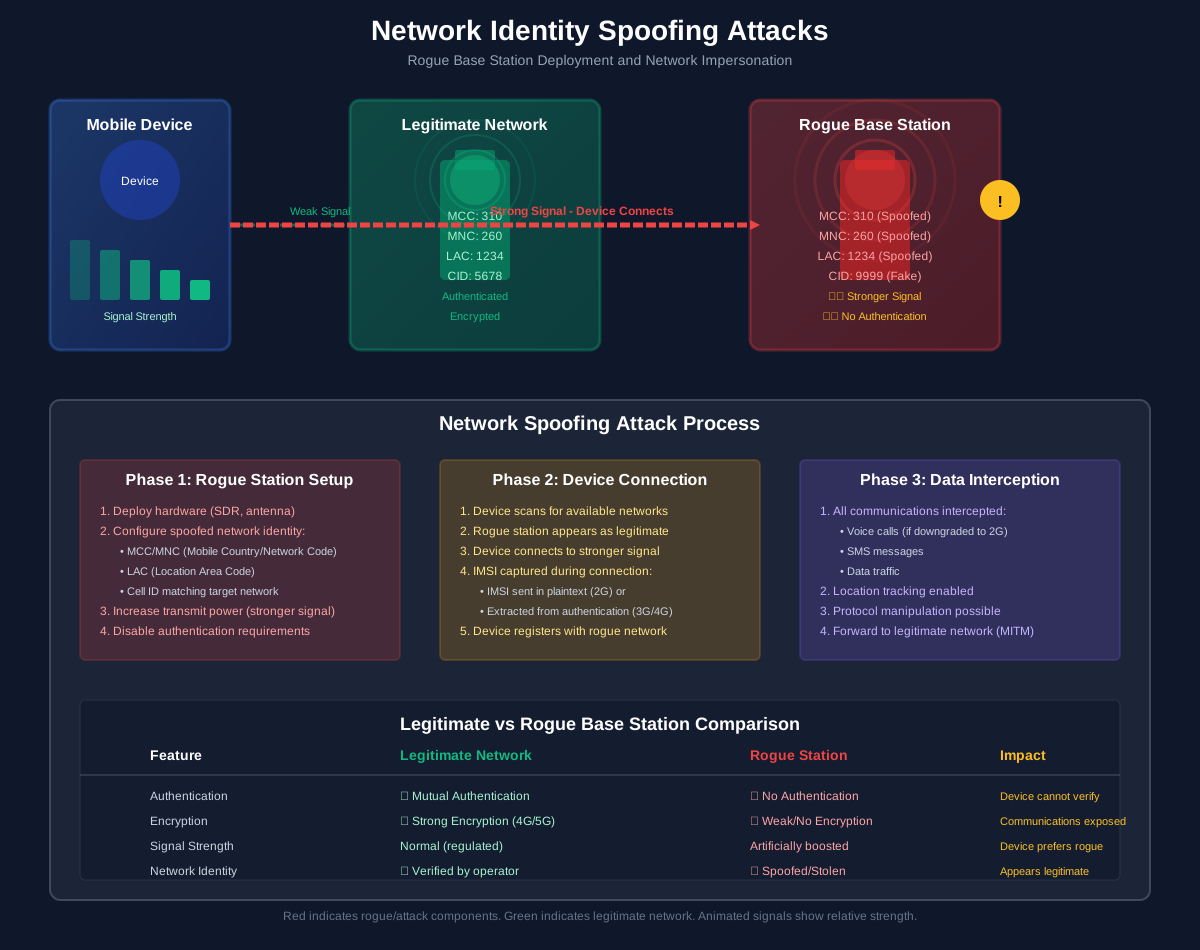
Network Identity Spoofing
Impersonating legitimate cellular networks to intercept device communications
Network identity spoofing diagram showing rogue base station setup, legitimate vs rogue network comparison, device connection flow, authentication bypass techniques, and data interception methods with animated network signals
Real-World Examples
Documented cases and practical scenarios
  • GSM protocol vulnerabilities (A5/1, A5/2)
  • LTE/4G protocol downgrade attacks
  • 5G protocol implementation vulnerabilities
  • IMSI catcher exploitation
  • Research demonstrations of radio manipulation
Detection Methods
Identifying radio interface manipulation attacks
Network-Level Detection
  • Monitor for protocol downgrade attempts
  • Detect duplicate IMSI registrations
  • Analyze signal strength anomalies
  • Track unusual network behavior patterns
Device-Level Detection
  • Monitor baseband processor behavior
  • Detect unexpected protocol transitions
  • Analyze radio interface anomalies
  • Implement baseband integrity checks
Mitigation Strategies
Recommended security measures and countermeasures
  • Implement strong protocol authentication
  • Deploy network-level security monitoring
  • Use encryption for all communications
  • Implement protocol downgrade protection
  • Deploy anomaly detection for radio interfaces
  • Regular security updates to protocol stacks

Related Attacks